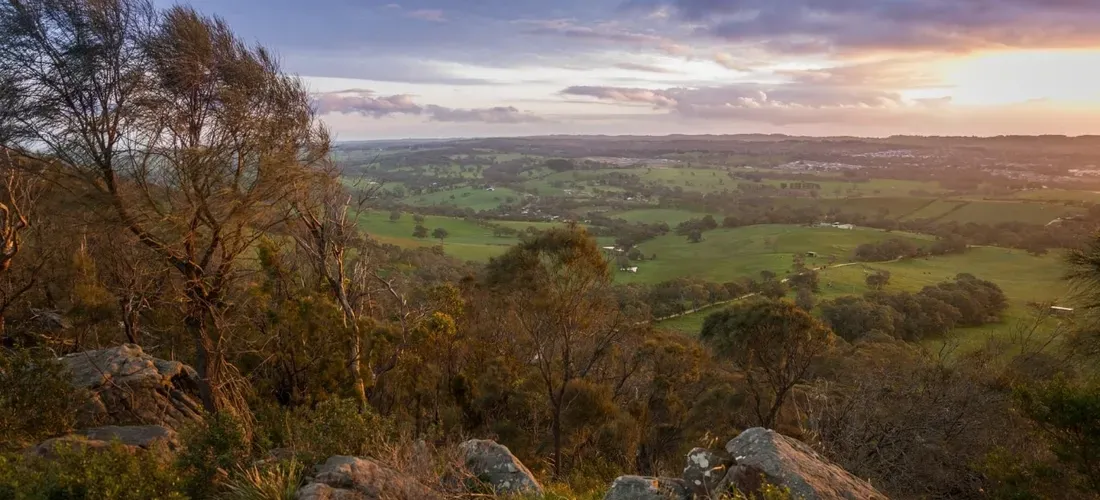
Travellers often pass through regional towns like Kojonup without understanding their deep historical and cultural significance. What looks like a quiet town on the Albany Highway has a layered past that shaped its community and its landscape.
Without a little background, it is easy to miss the chance to engage with Noongar knowledge, early settler stories, and the region's long roots in agriculture. This guide gives you an overview of Kojonup's cultural and historical background, from Indigenous heritage and European settlement to the key landmarks and the ongoing role of farming, so you can connect with the region during your stay. For the quick version, our six things to know about Kojonup covers the highlights in one read.
Indigenous history and Noongar heritage
The Noongar people are the traditional custodians of the Kojonup area. They have lived on this land for generations, carrying knowledge systems that connect deeply with seasonal patterns, native species and spiritual sites.
The name Kojonup comes from the Noongar language: kodj means stone axe and up means place of water, so the name describes a place where stone axes were made near a freshwater source. Stone tools found across the district reflect that long occupation and the way people used its resources.
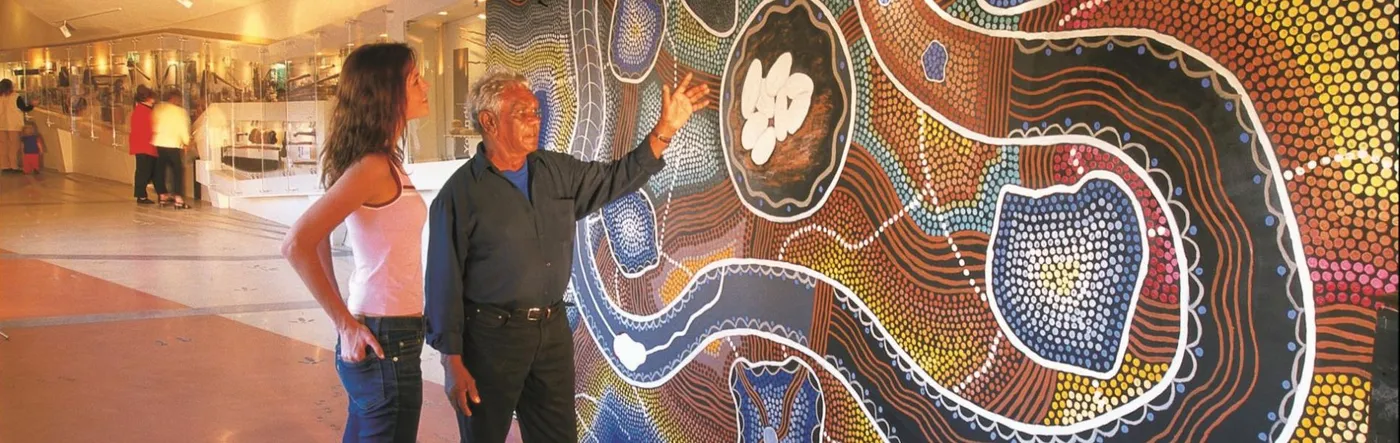
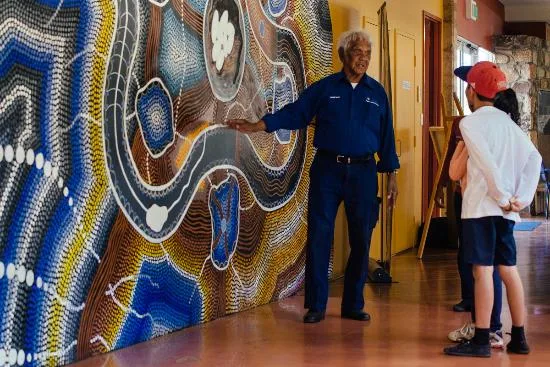
The Kodja Place cultural centre on Albany Highway is the best place to engage with this history. Its exhibits cover Noongar life, including bush food knowledge, Dreaming stories and environmental understanding, so you can see how culture and country remain linked across generations. Our guide to Kojonup's Aboriginal heritage goes deeper into the Noongar experiences on offer.
Early European settlement
European settlers moved into the Kojonup area from the 1830s, establishing livestock farms and food production on the inland route to Albany. In 1837 the surveyor Alfred Hillman was guided by Noongar people to the district's freshwater spring, recognised its value as a rest point on the road south, and recommended the site for development.
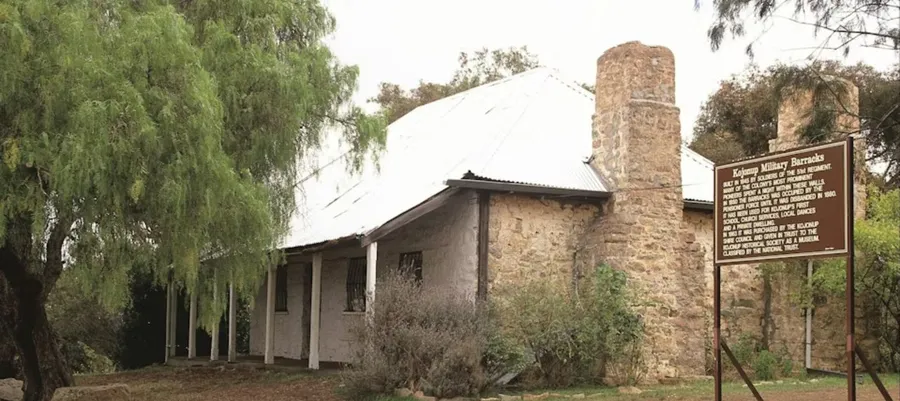
A military outpost followed in 1845. The Kojonup Military Barracks, built that year to support settlement and secure the route, still stands today and is one of the best-preserved early outposts in Western Australia. It is now cared for by the Kojonup Historical Society as a cultural museum, housing settler artefacts that map the daily life and challenges of the region's early development, including:
- Early farming tools
- Household objects
- Black and white photography of early town life
Public access to the barracks can be arranged through the Kojonup Visitor Centre, with tours on Sundays.
Agriculture and the growth of the region
Agriculture, especially sheep grazing and wool production, shaped Kojonup's economy through the 19th and 20th centuries. The landscape, with its dry pastures and cool nights, gave the district a reputation for wool quality and healthy livestock, and farming remains central to the town today.
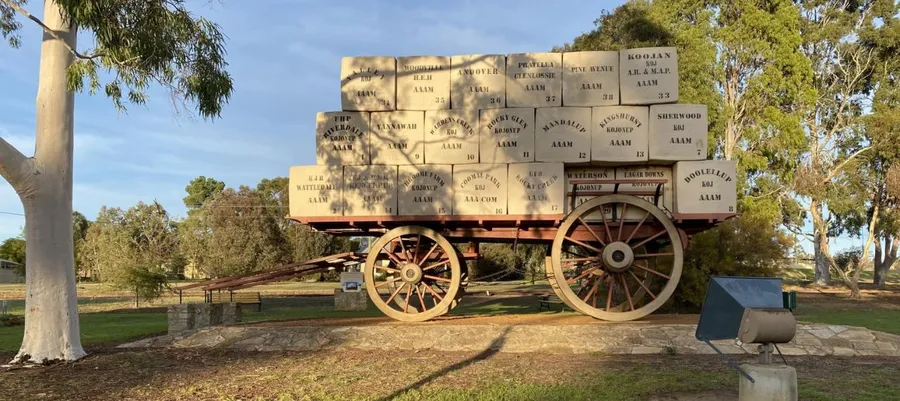
That wool heritage is easy to see on the ground. Near the Visitor Centre stands the Centenary of Federation Wool Wagon, a one-and-a-half scale replica that celebrates the district's record-breaking wool history and the teams that once carted the clip out of the wheat-and-sheep belt. The Kojonup Historical Society's displays at the barracks fill in the rest of the story:
- Vintage ploughs and carts
- Old blacksmithing setups
- Oral accounts of farm routines from past generations
Cemetery records and town memory
Kojonup Cemetery holds a surprising amount of local history. Headstones and plaques record the names of First Nations people, early settlers and community members involved in war service or local government.
Walk through the grounds to read the inscriptions and you gain a real sense of family structures, lifespan patterns and the individuals who shaped town life across more than 150 years.
Preserving history through local effort
Ongoing community initiatives keep Kojonup's heritage sites and cultural archives open and accurate. Kodja Place, the Military Barracks and the Historical Society's collections rely on local volunteers and town involvement to stay accessible.
Interpretive signage, guided tours and school programs help make sure the area's past reaches new visitors and future generations, keeping both Indigenous and settler stories connected to the present-day experience of Kojonup.
Plan a historical visit through Kojonup
You can build a simple itinerary around Kojonup's cultural and historical touchpoints:
- A morning visit to Kodja Place
- A midday walk through the town's heritage precinct
- An afternoon stop at the Military Barracks museum or the cemetery
- Local food and produce stops along Albany Highway
Each of these is walkable or a short drive from central accommodation. If you want the practical detail before you arrive, our guide to everything you need to know about Kojonup has the distances and opening notes, and the attractions page rounds out what else there is to see in town.
Stay close to Kojonup's heritage
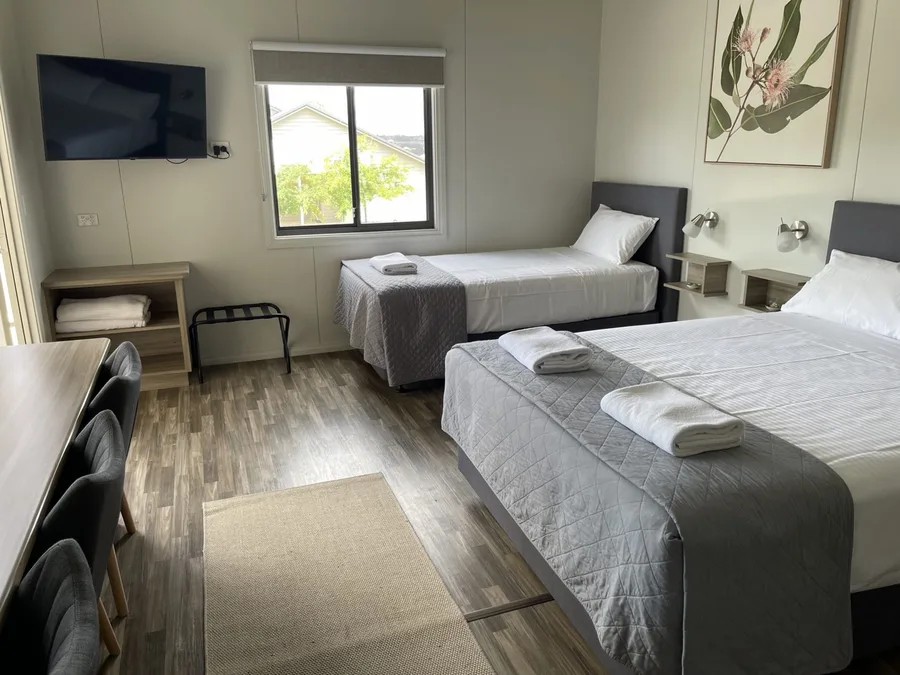
Cornwall House Accommodation offers quiet, convenient lodging within reach of Kojonup's historical sites. On Albany Highway in the heart of town, the house has 12 air-conditioned rooms, each with an ensuite, free WiFi, tea and coffee making facilities, and easy check-in, plus free onsite parking and direct road access to the key sites.
See our accommodation page for room details, then book your stay and explore Kojonup's heritage through its cultural centre, its barracks and its local history displays.
Check availability and book Call us (08) 9831 0214
Frequently asked questions
What does the name Kojonup mean?
Kojonup comes from the Noongar language. Kodj means stone axe and up means place of water, so the name describes a place where stone axes were made near a water source. Stone tools found across the district reflect that long occupation.
Where can I learn about Noongar culture in Kojonup?
At Kodja Place on Albany Highway, the town's cultural and interpretive centre. Its exhibits cover Noongar life, bush food knowledge, Dreaming stories and the connection between culture and country.
What is the oldest building in Kojonup?
The 1845 Military Barracks, one of the best-preserved early outposts in Western Australia. It is cared for by the Kojonup Historical Society as a cultural museum, and public access can be arranged through the Kojonup Visitor Centre, with tours on Sundays.
How do I plan a heritage day in Kojonup?
Start with a morning at Kodja Place, walk the town's heritage precinct at midday, and stop at the Military Barracks museum or the cemetery in the afternoon. Everything is walkable or a short drive from the town centre.
Where should I stay to explore Kojonup's heritage?
Cornwall House Accommodation sits on Albany Highway in the heart of Kojonup, within a short walk or drive of Kodja Place, the barracks and the town's heritage sites.